Insider Insights from the Singapore Grand Prix
A Race of Controversy and Redemption
The Singapore Grand Prix may not have been a thrill-a-minute spectacle, but it certainly sparked some lively discussions. As fans and analysts sift through the post-race fallout, the narratives emerging tell a story of unexpected pitfalls and commendable triumphs among the F1 teams and drivers. What stands out most is how some competitors faltered under pressure while others emerged stronger, seemingly unaffected by the weekend's challenges. For example, consider the performance of established drivers who stumbled, leaving their teams frustrated and questioning strategy. It raises a pivotal question: in high-stakes environments like Formula 1, how much do personal drive and experience weigh against sheer unpredictability? Conversely, certain drivers showcased their resilience, seizing opportunities when they presented themselves. Their ability to maintain composure in a race marked by tension and uncertainty serves not only as a testament to their skill but also highlights the broader dynamics of team morale and strategic decision-making vital in the championship chase. If you’re following F1 closely, this weekend's outcomes offer key insights into both driver psychology and team cohesion. The impact of these results will reverberate through future races, influencing everything from team strategy to individual driver standings. As the drivers gear up for the next challenge, one thing is clear: the highs and lows of the Singapore Grand Prix have set the stage for an enthralling season ahead.
Charles Leclerc, Ferrari, Max Verstappen, Red Bull Racing
Photo by: James Sutton / LAT Images via Getty Images
Survival in the high-pressure world of Formula 1 racing often hinges on the dynamics of team roles and strategy, especially during intense race weekends. As the Singapore Grand Prix approached, you could sense the fatigue mounting in both teams and drivers after a demanding schedule. Results can swing dramatically with even the smallest miscalculations, and that tension was palpable throughout the paddock.
Spotlight on Gianpiero Lambiase
While most eyes are usually glued to the star drivers, the spotlight this week rightly lands on Max Verstappen's race engineer, Gianpiero Lambiase. Perhaps unexpectedly, his role takes center stage after Verstappen scored a commanding victory at a track notoriously challenging for Red Bull. The team's decision to honor Lambiase on the podium during what could be his final race with Red Bull speaks volumes — not merely as a commendation, but as recognition of his significant impact on Verstappen's illustrious career.
Despite the triumph, there’s an undercurrent of uncertainty surrounding Lambiase's future. He’s slated to move to McLaren, with Tom Hart set to step up as his successor. But the transition raises concerns. Can Hart replicate the winning synergy that has produced 73 race victories for Verstappen and Lambiase? Or will the upcoming races expose weaknesses that weren’t evident before? The answer remains uncertain.
In this context, watching Lambiase take his final bow feels bittersweet. The duo's ability to navigate the complexities of race strategy made them legendary. Facing a new chapter is daunting — will the Verstappen-Hart pairing manage to achieve the same success? Only time will tell.
Strategic Missteps: Lewis Hamilton
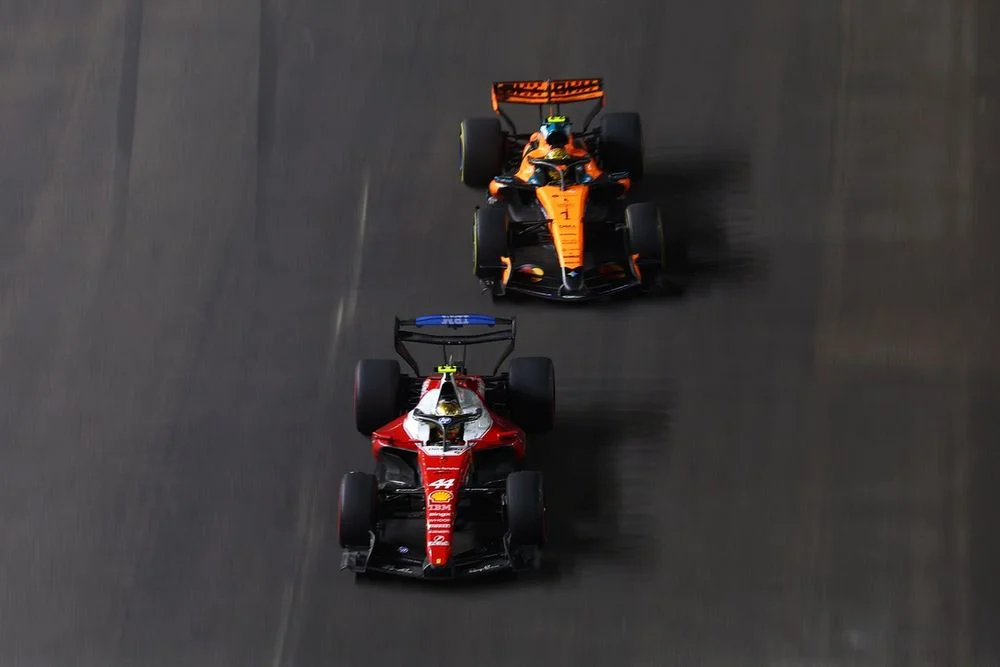
Lewis Hamilton, Ferrari, Lando Norris, McLaren
Photo by: Joe Portlock / Getty Images
Conversely, not every team enjoys the same clarity. As Ferrari’s team principle, Fred Vasseur, faced a barrage of questions regarding their performance in Singapore, it became clear that the team remains under scrutiny — possibly more than ever. While Ferrari often seems an easy target for criticism, particularly with their history of puzzling strategies, the decisions they made this weekend deserve a closer inspection. Dividing the race strategies between Charles Leclerc and teammate Lewis Hamilton aimed at exerting pressure on Verstappen. When this ultimately fell short, Ferrari still managed to position themselves for a double podium finish. Yet, muscle memory seems to suggest they could have done better.
One critical factor was the poor performance of medium tires on the circuit. With McLaren opting for soft tires on both cars, Ferrari seemingly missed an opportunity to adjust their strategy accordingly. Their hesitation to switch Hamilton off the increasingly ineffective medium tires proved telling, especially as he ended up struggling to secure a sixth-place finish instead of a potential podium.
The direction Ferrari chose to take was not without its flaws, but Hamilton's decision during a double-stack pit stop further complicated the scenario. His refusal to come in when the team called him meant they couldn't capitalize on a strategic advantage available under the virtual safety car. Had he complied, it could have significantly altered Ferrari's finishing positions. Instead, the onus now falls on Hamilton, who faced considerable backlash for his choice to stay out on track.
Addressing this dynamic is vital for both Ferrari and Hamilton moving forward as they face increased scrutiny. If Ferrari can refine their approach to team strategies, while Hamilton must adapt his in-race decision-making, they could yet recover to form and shift narratives in their favor.