Basketball
IMSA's BoP Update: What Aston Martin and Porsche's Changes Mean for Watkins Glen
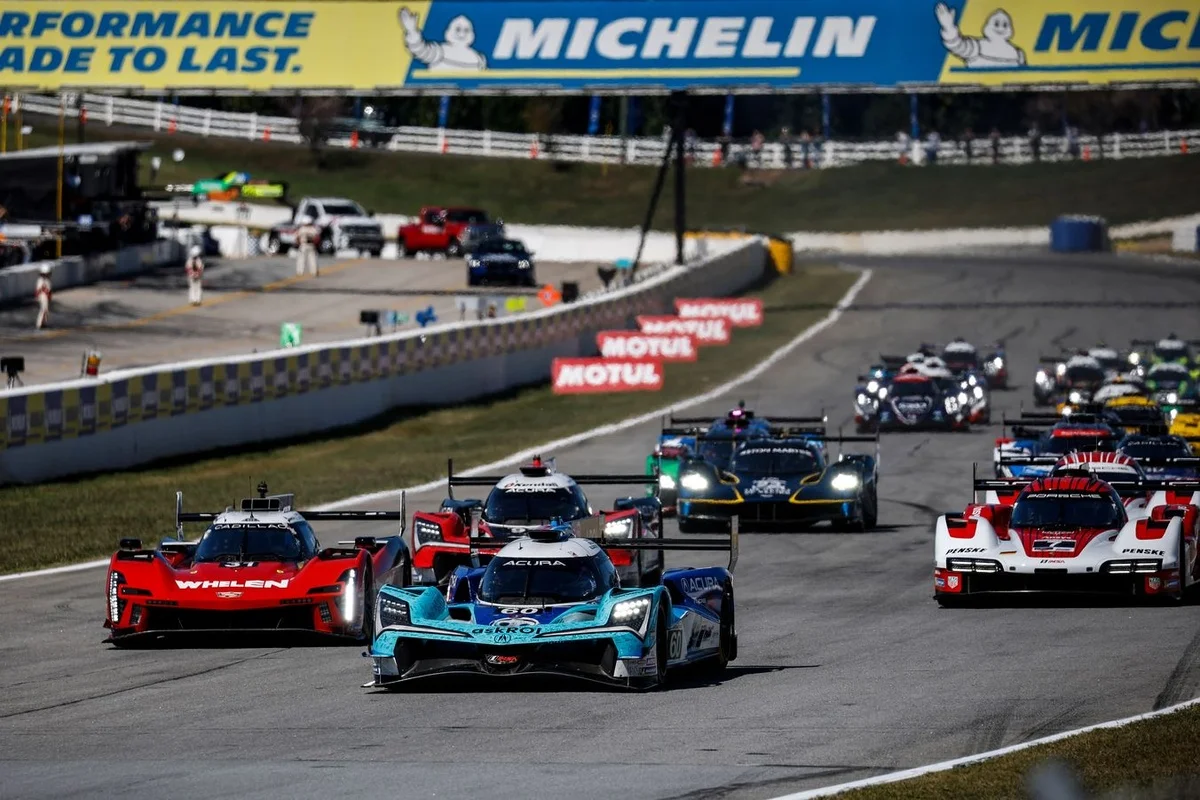
The latest IMSA BoP update introduces significant changes for Aston Martin and Porsche, shaping potential race outcomes at Watkins Glen.
Understanding IMSA's BoP Update for Watkins Glen
The Balance of Performance (BoP) changes for the upcoming IMSA race at Watkins Glen are sparking significant debate among teams and fans alike. This latest adjustment sees Aston Martin breaking new ground; for the first time, they will compete at a weight of 1,020 kilograms in the GTP category. This move marks a pivotal moment, especially considering how closely these weight figures correlate with a car’s handling and speed on the track. If you’re following the series, it’s crucial to recognize what this means for Aston Martin’s strategy.
Porsche, on the other hand, is arriving with a considerable power boost compared to last year's performance. While the specifics of these power adjustments are yet to be fully detailed, the implications are clear—Porsche might be gearing up for a strong showing in this race, potentially outpacing competitors who didn't receive equivalent enhancements. This dynamic raises critical questions about how effectively teams will adapt to these changes and how they could impact race outcomes.
The adjustments in BoP aren't just numbers on a page; they profoundly influence competition. If you’re involved in the motorsport community or closely monitoring IMSA, understanding these shifts can be the difference between a winning strategy and falling behind. As the teams gear up for this race, the question remains: will Aston Martin capitalize on its new weight or will Porsche's power lead the charge? The stage is set for some intense competition.IMSA's Tactical Adjustments
IMSA is proving to be adept at adjusting its regulations to level the playing field, as demonstrated by the recent changes to vehicle specifications ahead of the 6-hour race at Watkins Glen International. For the first time in GTP/Hypercar history, the Aston Martin Valkyrie is given a weight adjustment—its minimum weight is now lowered to 1,020 kg, breaking the previous baseline of 1,030 kg. This marks a significant shift in how performance metrics are calculated, illustrating IMSA's willingness to innovate in response to competitive disparities.
The weight reduction aims to enhance the Valkyrie's performance, especially given that it’s the only car on the track that hasn't undergone winter updates. With an 8th-place finish at Laguna Seca being its best showing so far this season, this adjustment could be crucial. Moreover, the change introduces a groundbreaking power-to-weight ratio for the series, dropping below 1.981 kg/kW, a milestone that might give Aston Martin a competitive edge.
Competitive Landscape Below 230 kph
A look at the low-speed power-to-weight ratios for the race reveals some striking numbers. Aston Martin’s Valkyrie comes in at an impressive 1.962 kg/kW, while the other competitors, including the BMW M Hybrid V8 and the Cadillac V-Series.R, are lagging with ratios above 2. With Aston Martin’s lighter setup, expectations are high that it could dominate in this scenario, especially in the tight settings of Watkins Glen.
When comparing the adjustments to this year’s previous events, such as at Detroit, the differences become even more pronounced. The Porsche 963 models, benefiting hugely from favorable weight breaks, now find themselves ahead in power-to-weight ratios for the slower portions of the track. This clearly delineates how car specifications can influence performance across various tracks and conditions.
Top Speed Dynamics
As speeds increase—crossing the critical threshold of 240 kph—the adjustments in power-to-weight ratios also morph dramatically. Aston Martin retains its edge with a weight-to-power ratio of 1.962 kg/kW, yet the gap to other competitors narrows. For instance, while Cadillac and Acura also show improvements, the complete picture indicates that the Valkyrie’s weight advantage might not be enough to maintain dominance at higher speeds.
Here’s where it gets interesting: Acura and Cadillac are seeing substantial performance gains despite previous setbacks in lower-speed metrics. Both American entries are capitalizing on the new configuration, allowing them to perform better against opponents that have not escaped winter modifications as unscathed. The new Porsche configurations, while still not the lightest, benefit from crucial adjustments that markedly improve their performance in straight-line speed engagements.
The tension in performance metrics showcases all teams' relentless quest for optimization. This will ultimately increase the pressure on Aston Martin as the other teams sharpen their strategies, making the upcoming race a true test of engineering prowess and tactical skill.Looking Ahead: The Porsche 963 and Its Rivals
The upcoming race puts a spotlight on the transformation of the Porsche 963, a car that has pivoted dramatically from its previous iteration. While the adjustments in power and weight are substantial, the real question lies in how effectively this balance translates to performance on the demanding track at Watkins Glen. With a power increase to 520 kW but a weight hike to 1,073 kilograms, the Porsche team faces a crucial juncture. Can they harness that additional horsepower to offset the extra mass, or will the added weight hinder their competitiveness, particularly in high-speed corners?
This year's leaderboard paints an intriguing picture. Porsche is positioned to gain significant ground, demonstrating the highest power-to-weight ratio. Conversely, while BMW has made notable progress—trimming weight and adding power—it's still unclear if those gains will suffice against Porsche's rumored improvements. The other competitors, notably Cadillac and Acura, were formidable in prior races but now seem to have slipped relative to Porsche and BMW. The numbers suggest an intensifying competition; yet, the results on the track will ultimately dictate who will emerge victorious.
Aston Martin, although enjoying a relatively low weight figure, might find its advantages overblown when faced with rivals gaining momentum in their configurations. Momentum will play a vital role; as the cars navigate the nuances of the Glen, where downforce instills confidence, a lighter frame doesn’t always guarantee success.
As we anticipate the race, a few strong narratives emerge. If you're involved in motorsports or engineering, closely watching these developments will not only inform you about the competitive dynamics but also underline how critical fine-tuning remains in this sport. While BMW and Porsche appear to be the frontrunners, the unpredictability of racing means anything is possible—and potential upsets are just a hairpin turn away. The upcoming showdown is set to deliver excitement, and all eyes will be on how these engineering feats perform under pressure.