Basketball
Analyzing the Bubba Wallace and Ty Gibbs Incident: Aggression vs. Teamwork in NASCAR
The clash between Bubba Wallace and Ty Gibbs highlights the tension between aggressive driving and teamwork in NASCAR.
Assessing a Critical Incident in NASCAR
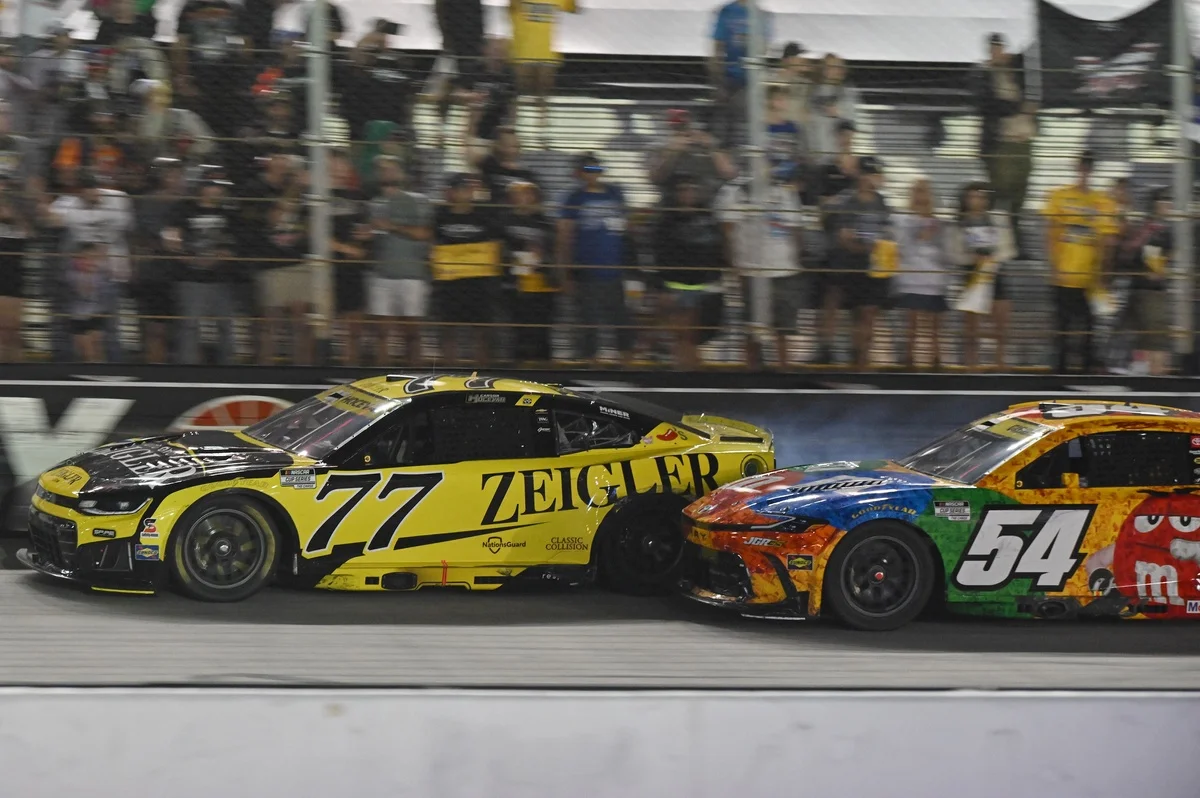
In the world of NASCAR, split-second decisions can lead to tension-filled confrontations. A recent incident involving Bubba Wallace and fellow driver Ty Gibbs underscored that reality during the turbulent end of Stage 2 at the Atlanta Motor Speedway. Both former race veterans Steve Letarte and Jamie McMurray weighed in on the controversy, characterizing Wallace's maneuver as an aggressive late block—a strategy that, while risky, often stirs heated discussions in racing circles.
Let’s break down what happened. Wallace was left fuming after an encounter with Gibbs, who he believed was driving too aggressively. It’s not just a matter of rivalry on the track; this sort of action can impact not only standings but also the reputations of drivers. McMurray’s and Letarte’s analysis highlighted how critical positioning is during the tense moments leading up to tight finishes. The remark about Wallace's tactics resonates with a larger theme in racing: the difference between aggressive driving and reckless endangerment.
This debate is more than a mere talking point for fans; it poses important questions about strategy vs. safety. If you're working in this space, understanding the nuance behind these incidents can be key to not only analyzing performance but also predicting how these interactions might affect team dynamics going forward.
As Wallace continues to navigate his tumultuous career, incidents like this one remind us all how vital it is for drivers to balance aggression with strategy—an eternal challenge that shapes every lap on the track.The Tensions of Team Dynamics
Bubba Wallace's spin during the race, triggered by a collision with fellow Toyota driver Ty Gibbs, raises significant questions about teamwork and intra-team racing strategies. As Wallace fought to secure a top-five position at the end of Stage 2, his slide up the track resulted in a critical setback—not just in points but also in his relationship with Gibbs.
After the incident, Wallace's dialogue with Gibbs clearly indicated tension. Wallace expressed his frustration, remarking that Gibbs had “the opportunity to give” but chose not to. His interpretation of Gibbs' actions strikes at an essential tenet of racing: the delicate balance between aggressive driving and collaborative teamwork. As Wallace put it, being hit "square in the bumper" reflects poorly on their ability to race as teammates. This isn't just a matter of on-track performance; it feeds into the narrative of cooperation—or the lack thereof—among drivers representing the same team.
Veteran commentators echoed this sentiment, adding nuance to the conversation. Steve Letarte, a former crew chief, contended that the block by Gibbs was extremely late, leaving little room for corrective action. His analysis, coupled with Jamie McMurray’s observation of Wallace's struggle to maintain grip, implies that both drivers might share culpability for the incident. Calling attention to Wallace's loss of momentum as he entered the corner, McMurray painted a picture of a driver caught in a compromising position.
In this incident, is it a failure of communication or simply a product of racing tension? That's the question that analysts are left pondering. Either way, Wallace managed to recover and finish second, but not without controversy. Following a decision by NASCAR to strip him of that result for crossing the double-yellow line, the implications of this weekend's events ripple even further. The lack of clarity in these rulings, particularly in action taken against Wallace, raises critical issues about how rules are interpreted and enforced in real time.
Ultimately, this incident is emblematic of deeper issues within NASCAR regarding teammate dynamics. Understanding how drivers negotiate their relationships on the track will be just as vital moving forward as any mechanical adjustments. The push for cooperation, trust, and clear communication among team members could result in better outcomes than brute talent alone. If you're involved in racing or even following it closely, you'll want to keep your eye on how this narrative unfolds in future races.Looking Ahead: The Ripples of Recent Critiques
The recent assessments of Bubba Wallace's driving techniques, particularly the scrutiny over a controversial spin during a race, carry implications that stretch beyond mere race day drama. Analysts Steve Letarte and Jamie McMurray dissected the incident, labeling it a "super late block." This observation doesn’t just point to a single action on the track; it unveils the broader conversations on race strategy and driver safety standards that are increasingly prominent in motorsport circles.
Here's the thing: these discussions are crucial, especially as the sport grapples with its image and policies regarding inclusivity and risk management. While Wallace is often in the spotlight for his performance and the pressures of being a prominent Black driver in NASCAR, moments like this can shift public perception and impact the narrative around him.
Moreover, if you’re involved in motorsports or sports journalism, these critiques may set the tone for how future incidents are interpreted. The focus on whether these actions constitute unfair advantage or reckless endangerment can redefine competitive boundaries and ethical considerations within the sport. The nuances of this incident, examined by seasoned commentators, may echo in future races, affecting both how fans and fellow drivers perceive tactics on the track.
In essence, while the conversation may seem momentary, it’s indicative of a larger shift in the sport's culture. The implications of such assessments can ripple outward, influencing regulatory discussions and affecting how drivers engage with each other on the track. As we look forward, keeping an eye on how this narrative develops could prove essential for both fans and participants in the sport.