Haas Racing's New Direction: A Bold Move or a Misstep?
You can sense the excitement—and the skepticism—surrounding Haas F1 Team's decision to sign Rafael Camara, the standout driver currently leading the Formula 2 championship, for the 2027 Formula 1 season. This is not a mere reshuffle; it's a strategic gamble that could either propel the team up the grid or lead to more questions about their judgment. The contrast with Esteban Ocon, their former driver, makes this an even more striking decision. What underscores the significance of this move is the current performance landscape in Formula 2. Camara's trajectory has been impressive, consistently showcasing the skills that might translate well into the more competitive Formula 1 arena. However, replacing Ocon, a driver with proven experience in the F1 circuit, raises critical questions. If you’re following this space closely, you can't help but wonder whether Haas is making a calculated risk or simply reacting to immediate pressures. The internal debate among observers about this transition reveals a split in perception. Some argue Camara's youth and aggressive driving style could inject fresh energy into the team that has struggled to find its footing. Others, however, express concern that Haas may be trading stability for potential, a move that could backfire considering the high-stakes nature of Formula 1 racing. What this means for Haas's future—and for Camara's career—remains to be seen. If successful, this decision might be viewed as visionary, paving the way for a new chapter in Haas's story. On the other hand, if it doesn’t yield the desired results, it could be seen as another miscalculation by a team often criticized for its handling of talent and resources. Only time will tell how this bold venture pans out for both the driver and the team.
Rafael Camara, Invicta Racing
Photo by: Dom Gibbons / Formula 1 via Getty Images
It’s official: Rafael Camara will take the wheel at Haas for the upcoming 2027 Formula 1 season, stepping in for Esteban Ocon. This announcement marks a significant milestone in Camara’s accelerated trajectory through the racing ranks, heralding his entry into F1 after a meteoric rise through the junior formulas.
Camara, only 21 years old, comes off a remarkable string of successes—he clinched the 2024 Formula Regional European Championship and the 2025 Formula 3 championship. Currently, he’s holding the lead in the Formula 2 standings by a narrow margin of seven points. His rapid advancement presents both exciting possibilities and considerable risks for Haas, especially when you contrast his raw talent to Ocon's proven racecraft.
The question looms large: has the team made the right call in replacing a seasoned driver like Ocon? Our analysts weigh in.
Camara's Speed: An Asset or a Risk?
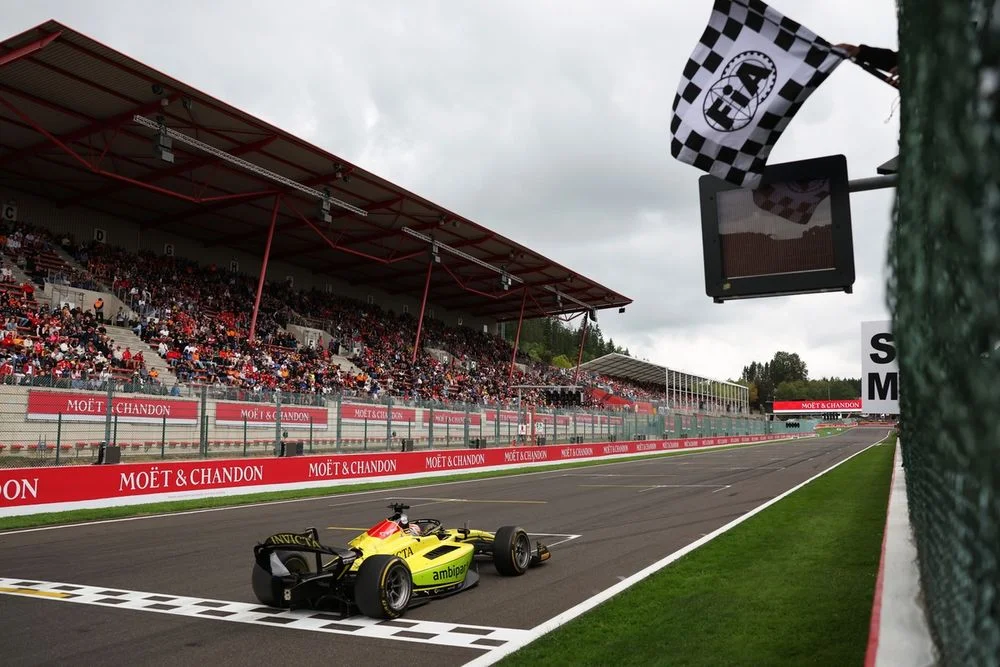
Rafael Camara, Invicta Racing
Photo by: Dom Gibbons / Formula 1 via Getty Images
A long-standing adage in motorsport states that you can train a quick driver to be consistent, but speed—true speed—can't be learned. Camara's impressive statistics firmly establish him as one of the fastest drivers in the past decade within lower-tier competitions. He secured seven pole positions during his triumphant 2024 Formula Regional European Championship campaign, outshining all others. His five poles in the 2025 Formula 3 championship mark an incredible accomplishment, a record not seen since Luca Ghiotto managed the same in 2015. And yet, that year, Ghiotto narrowly lost the title to none other than Ocon.
Now, a decade later, Ocon's tenure at Haas appears vulnerable as Camara steps into the spotlight. Are Ocon's struggles a true reflection of his abilities behind the wheel? Likely not, considering the VF-26's long-standing reputation for inconsistency. This turmoil may have affected team dynamics, justifying a shift—especially with a talent like Camara on the market.
Camara's appeal extends beyond speed; he carries the support from Ferrari, the same backing that is expected to extend to his future teammate, Oliver Bearman. Coupled with a stellar ascent through FREC, F3, and his current status at the top of the Formula 2 leaderboard, Camara isn’t just a flyer on a whim. Notably, he boasts five poles out of 13 races in F2—no one else has exceeded two this season.
Of course, it's essential to acknowledge the learning curve that looms. Though he has made strides, some missteps, like his unfortunate lock-up in Monaco while battling for victory, remind us of his rookie status. Nonetheless, consistent point finishes and significant victories reveal a driver who’s more than capable.
Haas risks missing Ocon’s veteran insights, but Bearman is showings signs of maturity that could pivot the team confidently into the future. A wise choice would consider the long-term implications of this transition.
- Ben Vinel
Why Swap an Established Winner for an Unproven Rookie?
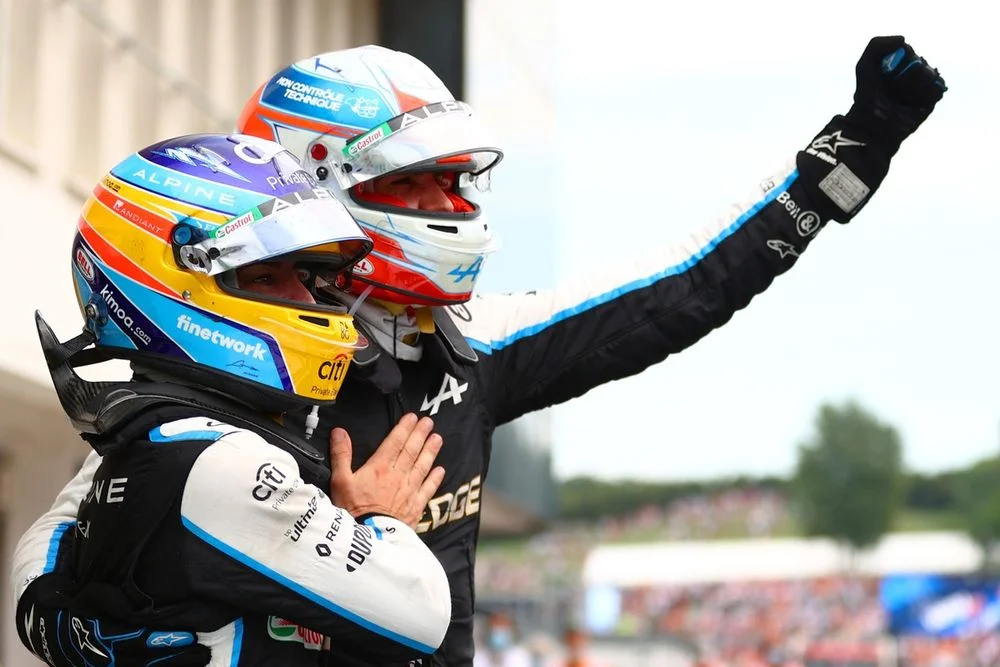
Ocon after winning the 2021 Hungarian GP
Photo by: Dan Istitene / Getty Images
Ocon expressed his frustration directly: he doesn't deserve the current situation, and it's hard to argue against him.
The statistics typically unveil a certain truth, and while Ocon has more seasoned insight and a legitimate claim to lead the team, Bearman has surpassed him in points this season. But does that mean Ocon has fallen short?
Ayao Komatsu has acknowledged the ongoing difficulties with the car's performance inconsistencies, leading to scenarios where Ocon hasn't been afforded a fair shot this year. Recent races suggest that, while Bearman may be outperforming Ocon, it's not by a significant margin.
Haas has thrived with experienced drivers throughout its history—think Romain Grosjean or Kevin Magnussen—who were instrumental in the team's growth. The episodes with rookie drivers like Mick Schumacher and Nikita Mazepin were primarily driven by financial imperatives, but does this strategy still hold weight today? It’s questionable.
The rationale for selecting Camara appears rooted in a desire for on-track performance, particularly if Ferrari is exerting pressure for another driver from its academy. However, it's difficult to see how Camara can immediately outscore Ocon, considering the latter's reliability and speed—as long as the car functions optimally.
This begs larger questions about Haas's direction. Are they opting to become a Ferrari satellite rather than maintaining an independent framework? The Ocon-Bearman pairing previously suggested a more sustainable approach for Haas, banking on drivers who aren’t just temporary tenants.
Of course, all assumptions could change if Komatsu has discovered something uniquely promising about Camara during their recent tests. Given Bearman's success, it's plausible that Komatsu has a keen eye for talent.
### Looking Ahead: Haas and the Quest for Young Talent The narrative surrounding Esteban Ocon has taken on a palpable sense of urgency. Many fans and commentators feel that he’s been unjustly treated by a team that has struggled with performance issues and seems eager to lay the blame on him. Ocon's desperate attempts to remind everyone of his accomplishments hint at a career hanging in the balance, and it's hard not to feel for him amidst the mounting pressure. However, while he has highlighted key points from his past, such as winning the GP3 series and outperforming Fernando Alonso during their time as teammates, the pressing reality is that his recent tenure has been less than stellar. Yes, he was impressive during his rookie season in 2017, and he indeed clinched a win in 2021 at the Hungarian GP. But the clock is ticking on Ocon's time with Haas, and the team’s future likely hinges on a fresh start. ### Rafael Camara: A Bright Prospect for Haas Enter Rafael Camara, a name buzzing in the racing community. The prospect of Haas signing him is more than just an opportunity; it could be a pivotal moment. Currently, Camara is on track to secure notable accolades in Formula 2, and should he capture the championship, he’d join an elite group of drivers who’ve achieved this status while still new to the scene. If you’re working in this space, you can’t overlook the potential impact he could have on Haas—especially given his impressive track record in junior racing. Critics might point to his age as a disadvantage, but history tells us that youth in motorsport often translates to innovation and raw speed. Consider that Kimi Antonelli, a name to watch for 2026 championships, started his own journey as a teenager. Camara has the right mix of skill and age to contribute significantly, and it’s time for Haas to capitalize on this opportunity. This isn’t merely about replacing Ocon; it’s about seizing a chance to bet on a future star. Young talents can shape the trajectory of a team, and if Camara delivers on his promise, Haas could be setting itself up not just for a competitive edge but for decades of success in Formula 1. It’s a gamble, but one that could pay massive dividends down the line. In short, Haas faces a crossroads. They can stick with the experience of Ocon, whose career has tragically plateaued, or they can embrace the risk that comes with nurturing a young talent like Camara. Given the current trajectory of both drivers, the choice seems clear: it’s time to invest in potential. Let's hope they make the right call.