Basketball
Kyle Larson's Brickyard 400 Heartbreak: A Lesson in NASCAR's Unpredictability
Kyle Larson's hopes at the Brickyard 400 were dashed by a tire failure, showcasing the unpredictable nature of NASCAR racing and the importance of resilience.
Kyle Larson's Tough Luck at the Brickyard 400
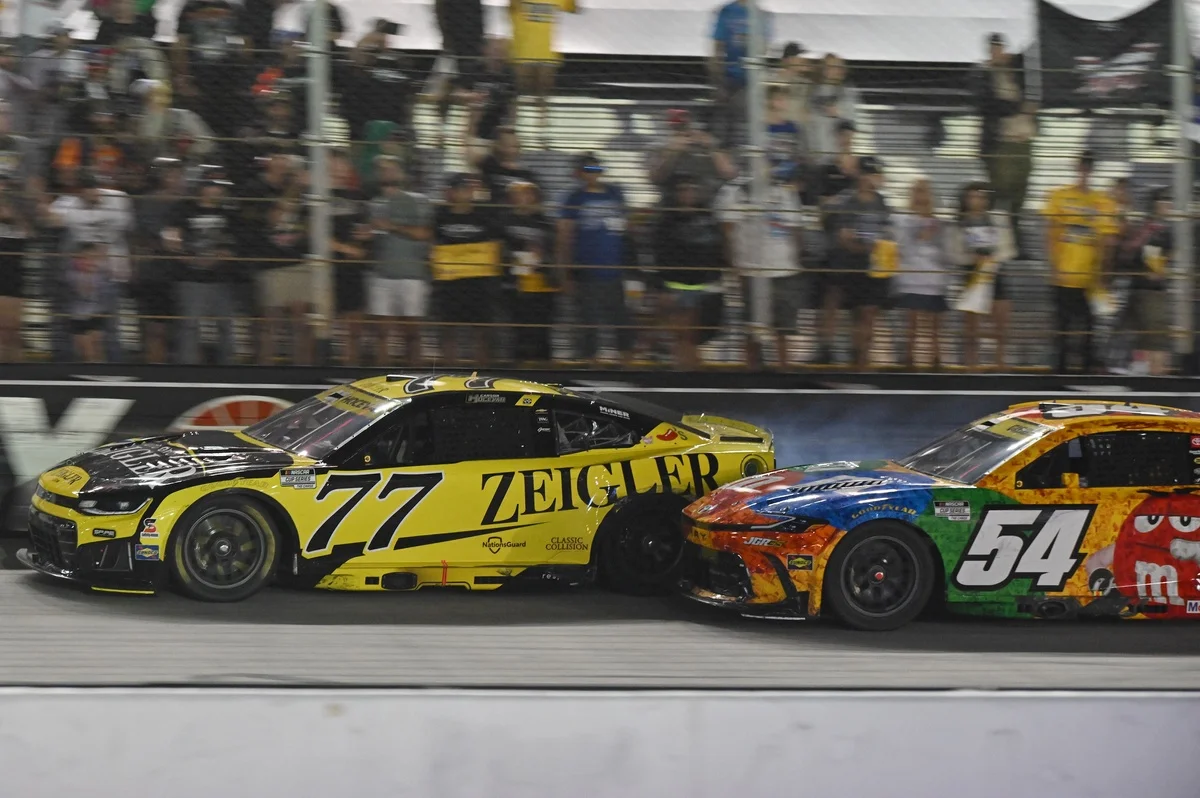
Kyle Larson's race at the Brickyard 400 took a drastic turn for the worse, resulting in him finishing in the last position after a significant crash. This isn't just another incident; it's emblematic of how quickly fortunes can shift in NASCAR racing. Just as Larson seemed poised to take control and possibly clinch the opening stage, a flat tire sent him crashing into the wall, triggering the race's first caution flag.
Here's the thing: Larson's misfortune highlights both the unpredictability and the high stakes inherent in NASCAR. One moment, everything can seem aligned for success, and the next, a mechanical failure can turn everything upside down. While the Brickyard 400 often serves as a stage for drivers to showcase their skills, it also reminds us that split-second decisions and even equipment failures can lead to devastating consequences.
For those engaged in competitive racing—whether as fans, participants, or analysts—this incident offers a critical lesson: preparation is vital, but so is resilience. As Larson recalibrates for future races, he'll need to revisit strategies that can help him not just recover from this setback but also position himself to capitalize on future opportunities. After all, every driver experiences tough days; it's how you respond that often makes the difference.Another Setback for Larson
Kyle Larson's recent run at the Brickyard 400 was anything but fortunate. Despite starting strong from tenth position and making strategic pit decisions that gave him a shot at winning Stage 1, fate took a bitter turn just yards from the finish line. With mere laps to go, his No. 5 Hendrick Motorsports Chevrolet suffered a sudden, catastrophic failure while entering Turn 3, resulting in a harsh impact against the wall. Larson speculated that a left-rear tire failure might have been the cause of his drastic spin, which left his team members—and fans—gripped by disbelief.
Crew chief Cliff Daniels’ reaction said it all. Moments after the wreck, he was seen conferring with Goodyear representatives, reflecting the urgency and frustration that a tire issue represents in high-stakes racing. Larson’s luck has been notably grim, having failed to secure a victory since before the grueling Indy 500/Coke 600 double-header in 2025. His performance at the Brickyard found him finishing well down the ranks—39th, with merely a single point to show.
“What we had was just a tire let go,” Larson expressed post-race as he exited the infield care center. “I wouldn't say that pushing had anything to do with it. I was only going three tenths quicker than I was before, saving fuel. Just a little bad luck.” He remained proud of his team’s efforts and strategy, emphasizing that they had positioned themselves well for a win despite the heart-wrenching mishap.
Amidst Larson’s frustration, there’s a looming concern. He’s currently sixth in the championship standings but will likely slip down several spots due to the tight race behind him as the Chase reset approaches following Daytona in just over a month. In this fiercely competitive landscape, every point counts. Just a moment later, Larson’s teammate, Chase Elliott, similarly faced his own trials, crashing out after a collision with Ricky Stenhouse Jr., which only underscores the mounting pressure within the Hendrick Motorsports camp.
The implications are clear: Larson’s challenging season, now punctuated by multiple finishes of 34th or worse in recent races, raises questions about what’s next for him—especially as they head toward the crucial stages of the season.Looking Ahead: The Road from Brickyard
The recent conclusion of the Brickyard 400 underscores an important moment in Kyle Larson's racing journey—finishing in last place following a crash. While individual race outcomes can be dramatic, this incident reflects broader trends in NASCAR regarding safety, performance, and the intense competition that drives these athletes.
What’s compelling here is not just Larson's misfortune. There's a real conversation brewing around the need for advancements in car safety and more robust recovery protocols. Each crash raises the stakes for teams and drivers alike, prompting a push for innovation in a sport that has historically been slow to change. If you're involved in motorsport management or engineering, these discussions about safety improvements and vehicle integrity are particularly relevant. They signal where the industry is likely heading, pushing teams to evolve or risk falling behind.
It’s also essential to consider how such incidents impact fan engagement. Crashes—while undeniably a part of the racing spectacle—can drive viewers away when they lead to serious injuries or perceived risks. NASCAR does earn points for its commitment to evolving safety standards, but there’s still a delicate balance to maintain between the thrill of the chase and the safety of the competitors.
As fans digest this latest event, it serves as a crucial reminder: the unpredictability of racing is part of its draw, but as we look to the future, the emphasis must shift towards ensuring that such unpredictability doesn’t come at the cost of safety and sportsmanship.
For those watching or participating in NASCAR, this moment serves both as a cautionary tale and a call to action. You’ll want to stay tuned, because the lessons learned here will undoubtedly shape the dialogue leading into the next events—and who knows how they might affect the roster for races yet to come.