Battery Strategies Define Performance at the Belgian Grand Prix
2026-07-19 19:19
678 views
The Belgian Grand Prix showcased the pivotal role of battery technology and energy management in Formula 1, impacting team strategies and race outcomes.
## Unpacking the Belgian Grand Prix: Winners and Losers
In a dramatic twist, the Belgian Grand Prix highlighted the critical role that battery technology and energy management play in modern Formula 1 racing. This year's race, much like the current championship itself, has turned the spotlight on energy deployment strategies, underscoring how vital they are to success on the track.
For those who follow the sport closely, this isn't just another race; it reflects ongoing shifts within Formula 1, particularly as teams adapt their strategies to leverage evolving battery technologies. As the competition heats up, understanding these shifts is essential.
Take the recent performance of top teams as a case study. Decisions around energy recovery and battery use are no longer just technical nuances; they can be the difference between a podium finish and a disappointing result. In particular, the innovative approaches adopted by certain teams at Spa-Francorchamps are worth examining. These strategies suggest that the future of racing will rest heavily on how effectively teams can manage their energy resources.
What does this mean for you if you're involved in this space? If you're working on or following F1, your lens should shift to how these technological changes influence not just results but the competitive landscape itself.
The recent race isn't just a blip on the radar; it’s a vital indicator of where Formula 1 is headed. As the championship unfolds, it will be intriguing to witness how teams continue to adapt to this pivotal aspect of racing strategy. Whether this results in unexpected champions or confirms the dominance of established players remains to be seen, but one thing is clear: the interplay between battery technology and driver skill is now a central narrative in the sport.
Winner: Kimi Antonelli
He's practically invincible this season. Kimi Antonelli continues to demonstrate a remarkable ability to outmaneuver any challenge that comes his way in F1 2026. Although his start wasn’t as chaotic as that of his teammate George Russell, Antonelli still faced immense pressure early on when four-time world champion Max Verstappen surged past him through Eau Rouge.
Did Verstappen gamble too aggressively, using up his energy reserves too soon? Possibly. Whatever the case, Antonelli quickly regained control and effortlessly overtook Charles Leclerc to take his sixth victory of the year. While his pole position was impressive, his race performance showed a maturity well beyond his 19 years.
Loser: George Russell
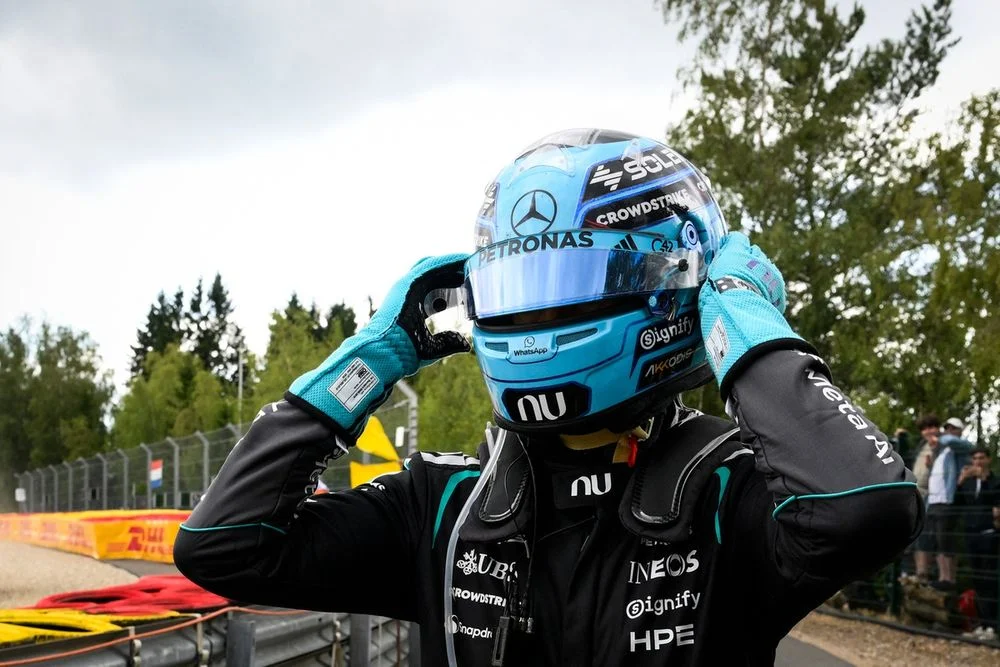
George Russell, Mercedes
Photo by: John Thys / AFP via Getty Images
Just when it seemed like Russell might have a chance after Antonelli faltered at Silverstone, disaster struck again at Spa. After a frustrating qualifying session where his power unit’s energy deployment algorithm underperformed compared to Antonelli’s, the situation worsened on race day. His car failed to recover energy at Turn 1, effectively leaving him vulnerable to a collision with Lewis Hamilton.
Interestingly, Russell took the incident with Hamilton in stride, but his real frustration lies with Mercedes. The latest glitch with the power unit didn't just hurt his speed—it put him in a precarious position that led to the collision.
The overarching narrative here isn’t just about Russell’s misfortunes; it’s also about the growing gulf between him and Antonelli, which is becoming a pressing concern if he intends to remain competitive in the championship race.
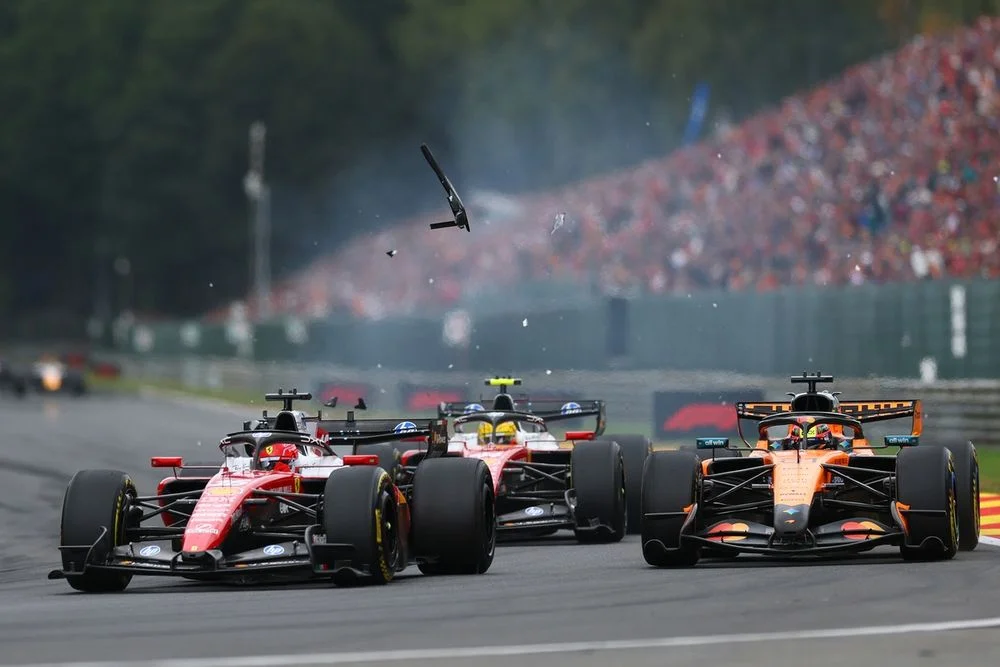
Ferrari's day was riddled with challenges. Leclerc managed to get away with a questionable move against Oscar Piastri
, and a timely virtual safety car played to their advantage. Meanwhile, Hamilton's mishap—getting penalized for understeering into Russell—compounded Ferrari’s fortune, as it resulted in more chaos during his pit stop.
To emerge from such turmoil with a second for Leclerc and a fourth for Hamilton is something of a coup, especially on a power-hungry circuit where Ferrari's deployment issues were expected to arise. It's a testament to their ongoing reliability, contrasting strongly with Mercedes' struggles, thus keeping their championship hopes alive.
Photo by: Clive Rose / Formula 1 via Getty Images
Final Reflections
What's clear as we step back from this whirlwind of motorsport action is that we're witnessing a critical juncture for many teams, especially Audi and Aston Martin. For Audi, the recent uptick in points—moving from a mere two to eight in just over a week—offers a glimmer of hope. This improvement is no small feat, as they claw their way closer to Williams. If you’re tracking performance trends, you'll want to keep an eye on Gabriel Bortoleto, who continues to defy expectations week after week. His ability to outperform established competitors like Arvid Lindblad shows that he might just be the key to Audi's resurgence this season.
On the flip side, Aston Martin finds itself in a precarious position. The team is clearly in a state of crisis, marked by a startling underperformance at Spa that had their drivers struggling to keep pace. There’s no sugarcoating the reality here: unless their upcoming upgrades deliver a miraculous turnaround, they face an uphill battle. And as commendable as the promise of updates is, the gap to top teams likely won't close with just bolts and tweaks. They need something more substantial.
Here's the takeaway: if you work in this space, the fates of teams like Audi and Aston Martin underscore that the mid-season shake-up can either propel a team forward or bury it deep in the standings. As upgrades roll out and drivers push their limits, the landscape could change rapidly. It’s going to be fascinating to see how the next couple of races unfold.